Section 01 · Vegetable by vegetable
Vegetable by vegetable, and what is published for each one
One page per vegetable, and only for the vegetables a named document actually covers. Where nothing is published, the page says nothing is published.
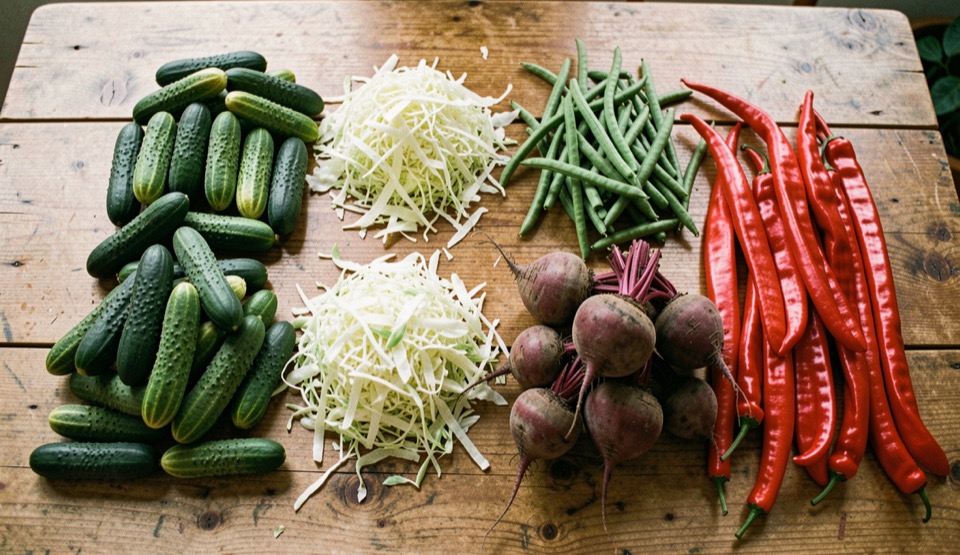
On this page
On this page
This section opens one page per vegetable, but only where a named document actually publishes something. Every entry that follows rests on a printed recipe from the national guide, from Oregon State's PNW 355, from Penn State, from Clemson, or from Colorado State. Where nothing is published, the page says so and stops there.
How to read a vegetable sheet
Each sheet always reports the same fields when a source publishes them: the salt, the acid, the fermentation or processing temperature, the duration, the headspace, and the boiling water bath schedule, with its altitude bands. If a field is empty, it is empty because no accepted source prints a number for it. An empty field is not an invitation to estimate. The rule of this manual is that no number appears here unless a named publication printed it first.
Fermented and fresh-pack are two different techniques
The sources themselves draw the line. In a fermented, or brined, product, "acid is produced as lactic acid bacteria grow" over several weeks of curing at room temperature (PNW355). A fresh-pack, or quick-process, product "is not fermented; some are brined several hours or overnight, then drained and covered with vinegar and seasonings" (the national guide). The acid arrives ready-made, as 5 percent vinegar, in one or two days (PNW355). A vegetable can have a published fresh-pack recipe and no published fermented version at all, and that is the most common case in this section.
Only cucumber and cabbage have published lactic fermentations
In the national canon, lactic fermentation exists for exactly two products: fermented dill pickles and sauerkraut. Penn State says the same: "only research-based recipes for fermented vegetables include procedures for sauerkraut and fermented pickles." No other vegetable on these pages has a published fermentation, and extrapolating from cucumber or cabbage to another vegetable is not permitted.
Why salt means different things in the two families
In the fermented recipes, salt is a working ingredient: half a cup of pickling salt per gallon of container for fermented dill pickles, and 2 to 2.5 percent salt by weight for sauerkraut as Colorado State prints it. In the fresh-pack recipes, salt is almost never a preservative. It is either residual, at 1 1/2 to 5 teaspoons per batch, or it is used in a preliminary brining and then rinsed or drained away. Safety in those recipes rests entirely on unmodified 5 percent vinegar and on the heat process.
One exception, and its limits
Clemson's Home and Garden Information Center publishes a cabbage kimchi dated September 4, 2025. It is a refrigerated lactic fermentation with no published heat treatment, fermented at 68 to 72 degrees F for 1 to 5 days and stored up to 6 months in the refrigerator. It stands in tension with Penn State's narrower position, and the two sources do not agree; this manual prints both without deciding between them.
What is published, vegetable by vegetable
| Vegetable | Published type | Source |
|---|---|---|
| Cucumber | Lactic fermentation, plus fresh-pack | NCHFP / USDA Guide 6 |
| Cabbage, sauerkraut | Lactic fermentation | NCHFP / USDA Guide 6 |
| Cabbage, kimchi | Lactic fermentation, refrigerated | Clemson HGIC |
| Green bean | Fresh-pack | NCHFP / USDA Guide 6 |
| Carrot | Fresh-pack | NCHFP |
| Beet | Fresh-pack | NCHFP / USDA Guide 6 |
| Cauliflower | Fresh-pack | NCHFP / USDA Guide 6 |
| Pepper and chile | Fresh-pack, five recipes | NCHFP / USDA Guide 6 |
| Green tomato | Fresh-pack, three recipes | NCHFP / USDA Guide 6 |
| Onion | Fresh-pack | NCHFP |
| Summer squash and zucchini | Fresh-pack, three entries | NCHFP / USDA Guide 6 |
| Asparagus | Fresh-pack | Oregon State PNW 355 |
| Mixed vegetables | Fresh-pack | NCHFP / USDA Guide 6 |
| Radish, turnip, ginger, garlic | Nothing published, not found | None |
This page does not give quantities, times, or temperatures for any vegetable; those live on each vegetable's own page. It also does not report anything for radish, turnip, ginger, or garlic beyond the fact that nothing was found, and a "not found" here means not found in the sources actually consulted, not proven nonexistent. Penn State's root vegetable sheet was not searched for brining and remains unverified.
Sources of the figures on this page
- National Center for Home Food Preservation, University of Georgia, General Information on Pickling, adapted from the USDA Complete Guide to Home Canning, revised 2015, reviewed February 2018. The four classes of pickled product, the 5 percent vinegar requirement, and the prohibition on altering proportions.
- Oregon State University Extension Service, Pickling Vegetables, PNW 355, by Jeanne Brandt, revised July 2019, reviewed 2024. Equipment, water, salt and vinegar, the fermentation procedures and seventeen tested recipes.
Section 01Everything filed here
15 entries, most recently revised first.
-
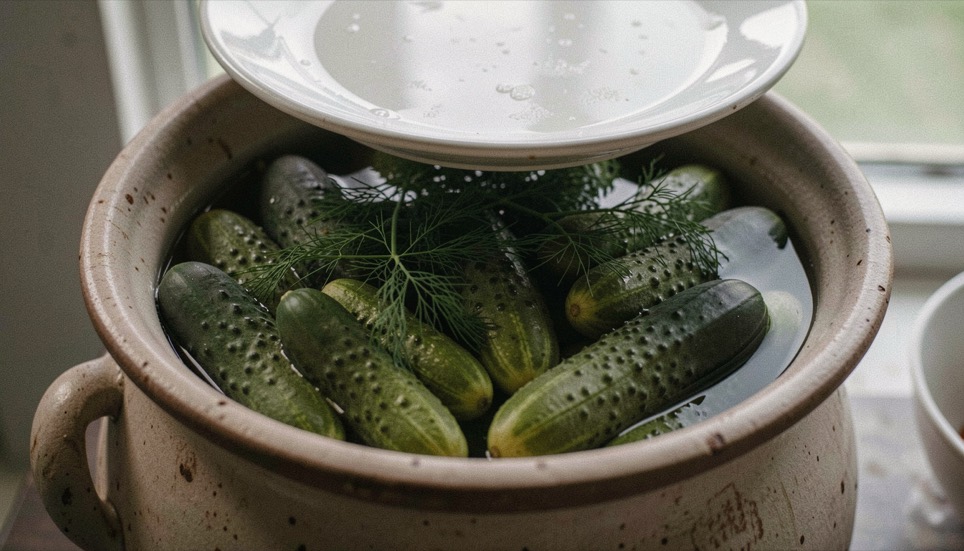
01.01
Fermented dill pickles, cucumber by the gallon of crock
The oldest and the most documented of these recipes, printed the same way by four separate publications, all of them adapted from one national guide.
-
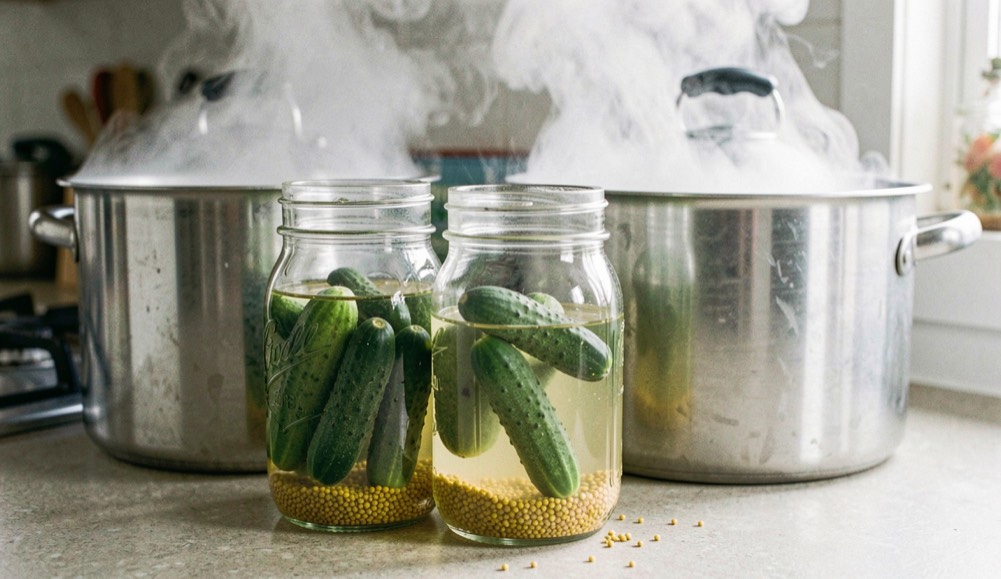
01.02
Quick fresh pack dills, the cucumber that never ferments
No lactic bacteria, no crock and no three weeks: acidity arrives ready made in the jar, which changes what the recipe is allowed to do.
-
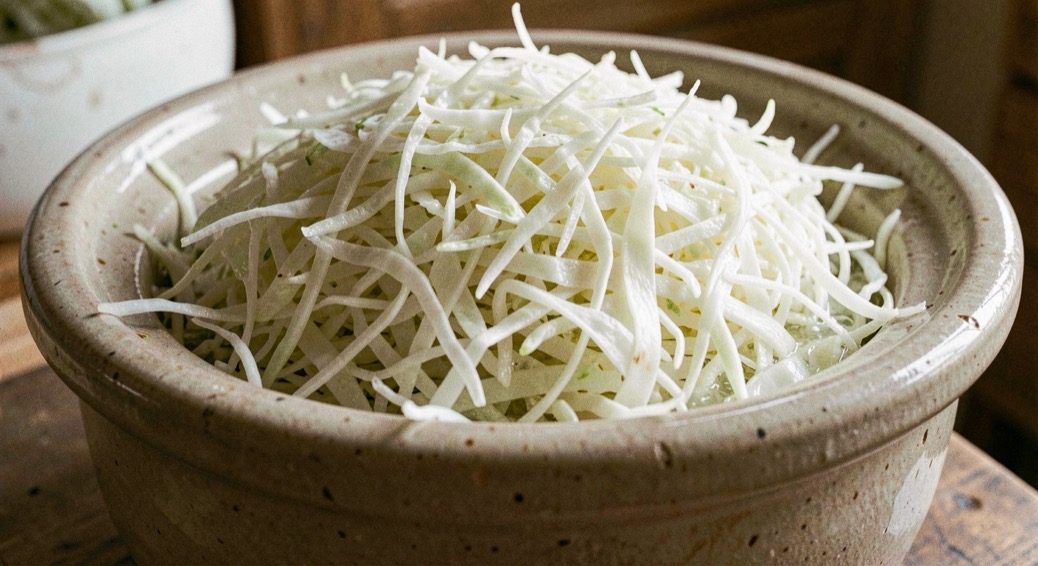
01.03
Sauerkraut, and the one recipe published as a percentage
The only vegetable on this site for which a source states the salt as a percentage of the weight, and the only one where two documents print different temperatures.
-
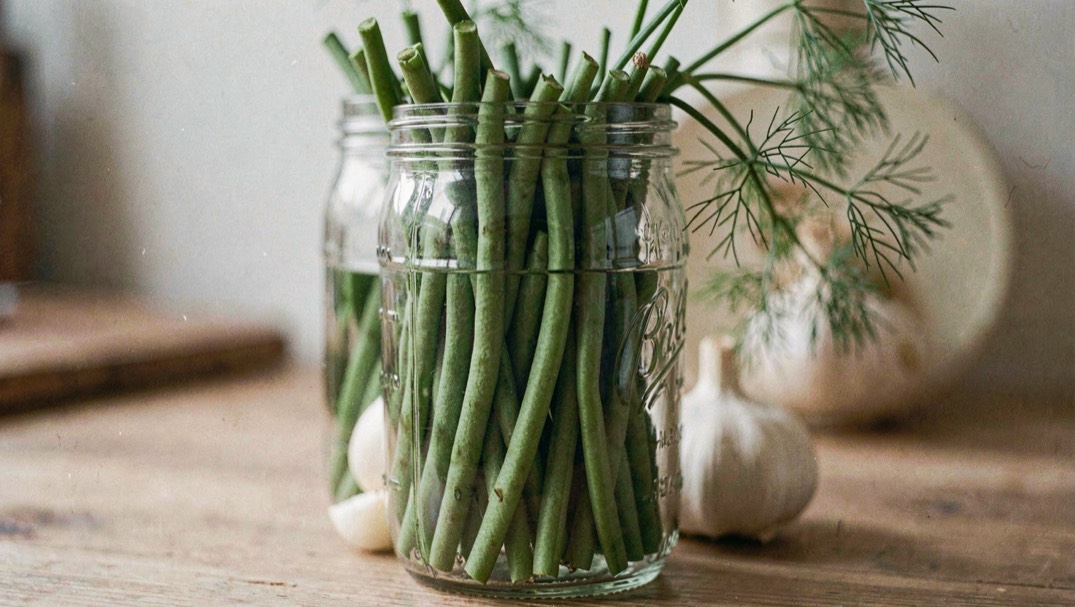
01.04
Dilled beans, upright in the jar and never fermented
A fresh pack recipe with one of the shortest processing times published, and no fermented version anywhere in these sources.
-
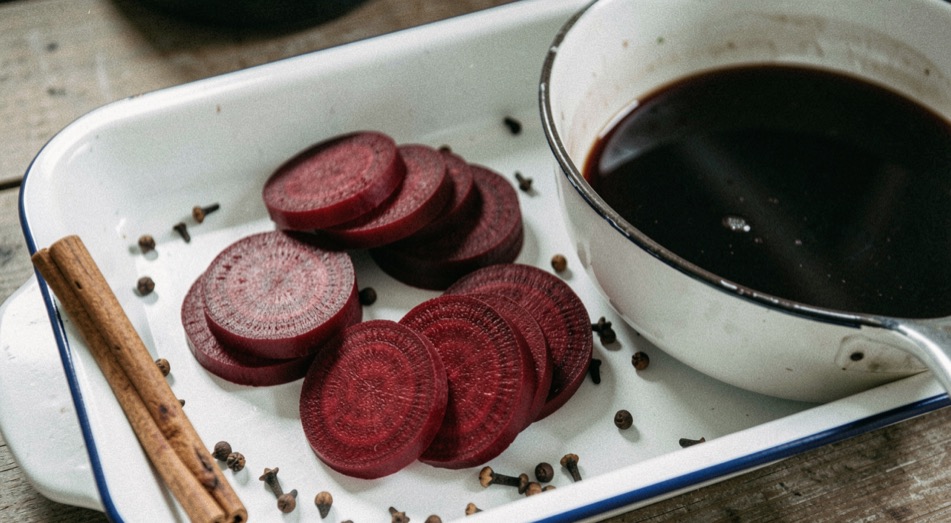
01.05
Pickled beets, cooked before they are ever pickled
The only recipe here that cooks the vegetable through first, and the only one whose preparation step exists to keep the colour in the beet.
-
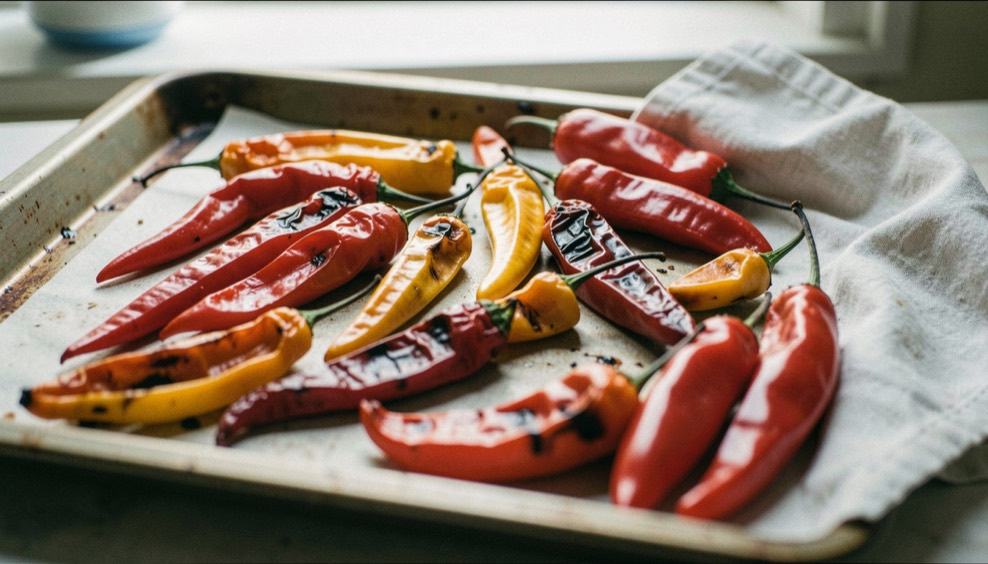
01.06
Pickled hot peppers, blistered before they are packed
The one recipe on this site that carries a safety instruction about the cook rather than the food, and the only one with a skin removal step.
-
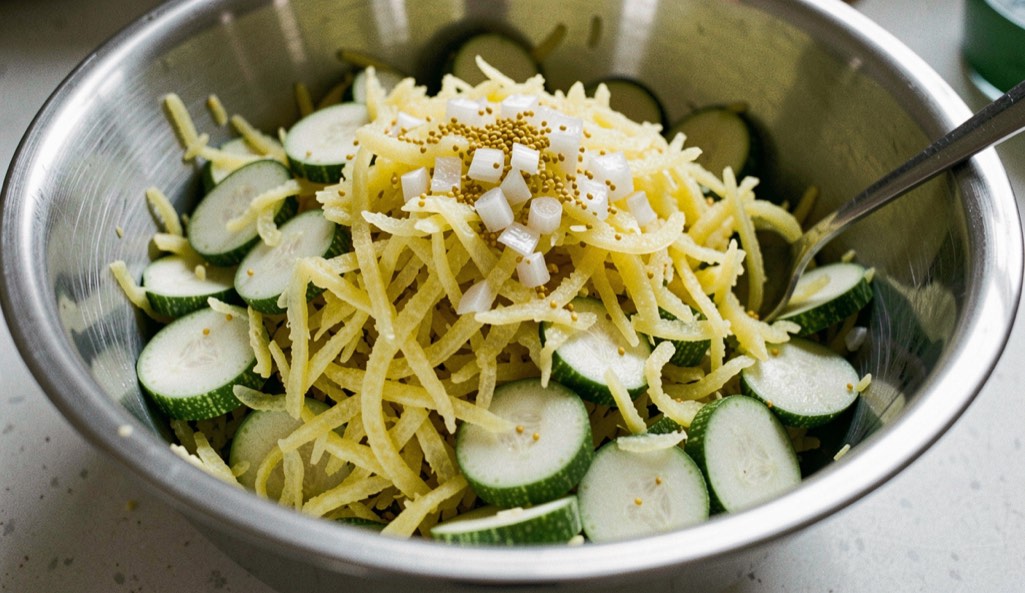
01.07
Summer squash relish, the one recipe that is not a pickle
A relish rather than a pickle: the vegetable is grated, the liquid is thick with sugar, and the class it belongs to changes what the schedule is for.
-
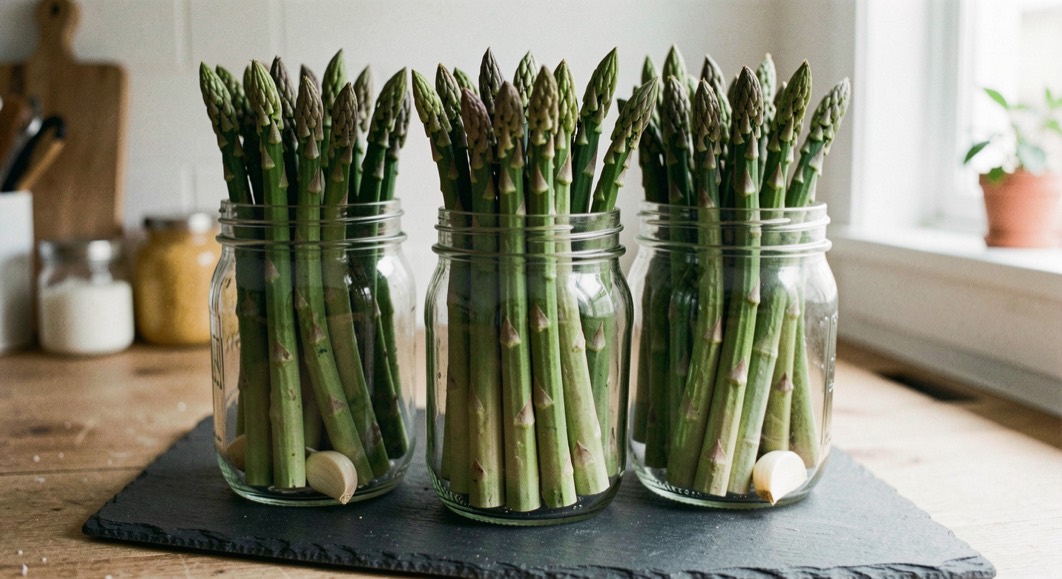
01.08
Pickled asparagus, equal parts water and vinegar
One of the seventeen tested recipes in a single extension publication, and one of the few that names a twelve ounce jar in its schedule.
-
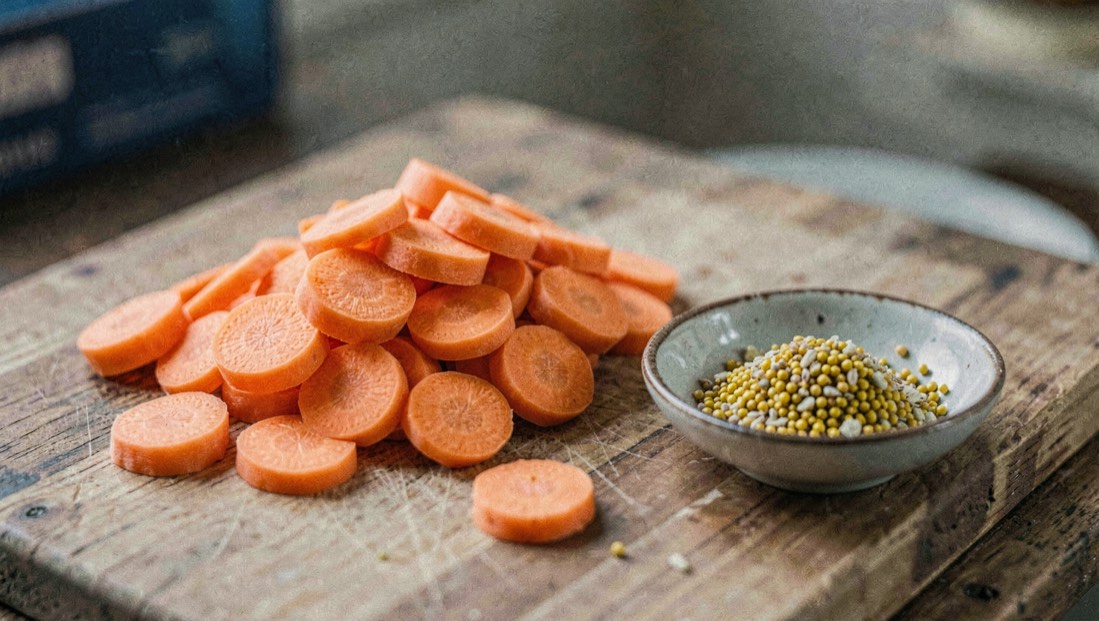
01.09
Pickled carrots, and a brine where the salt is not the preservative
The clearest published example of a recipe whose salt is there for taste and whose safety rests entirely on the vinegar.
-
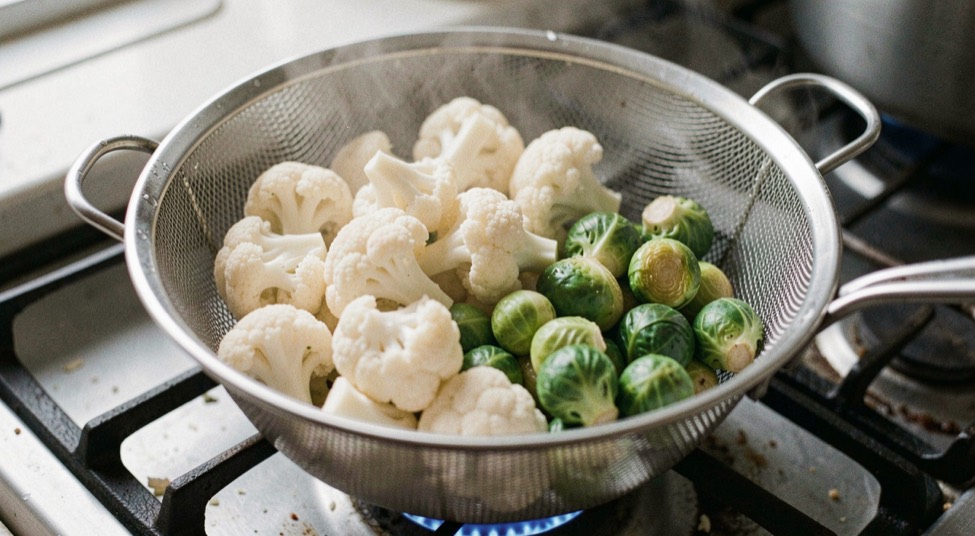
01.10
Cauliflower and Brussels sprouts, and a salt that is thrown away
One of the two recipes here with a salted blanching water, a quantity that never reaches the jar and must not be confused with a brine.
-
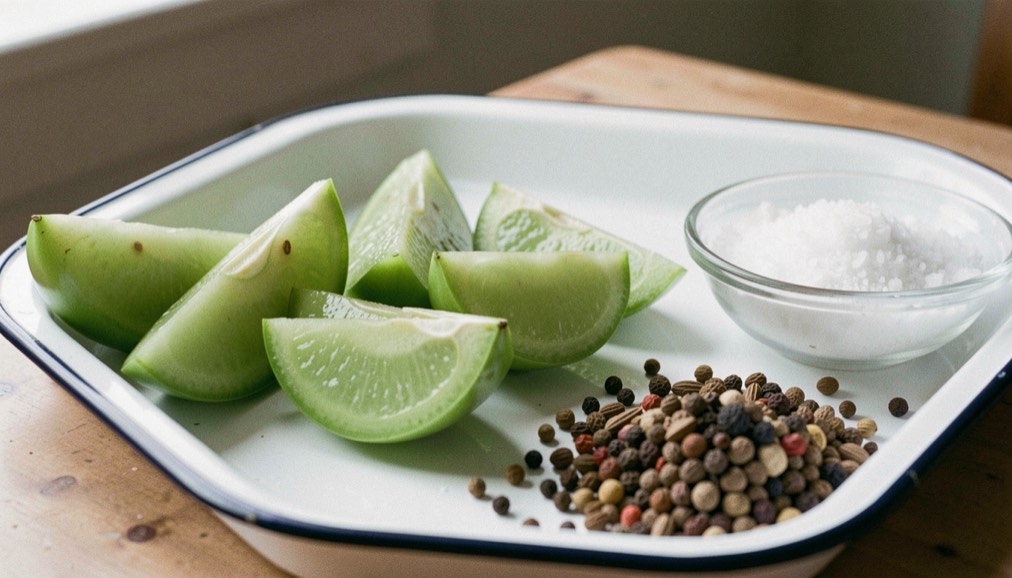
01.11
Green tomatoes, three published recipes and one trap
The vegetable with the most published variants here, and the one where the strongest brine of all belongs to a recipe that is not a fermentation.
-
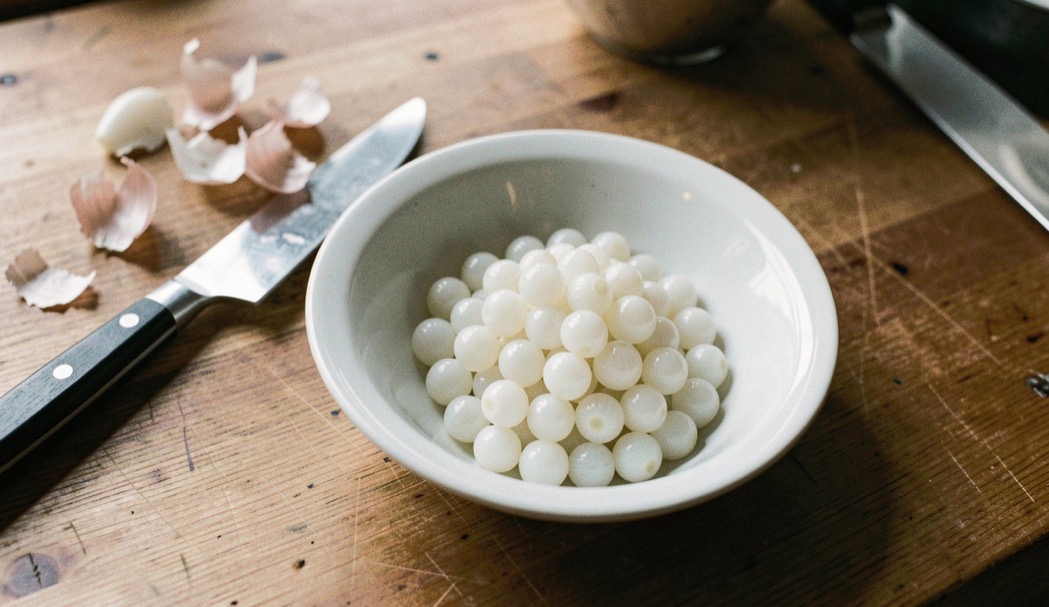
01.12
Pearl onions, the smallest vegetable in the whole set
A short recipe, and a useful one to read against the others, because almost every step in it exists to handle the size of the vegetable.
-
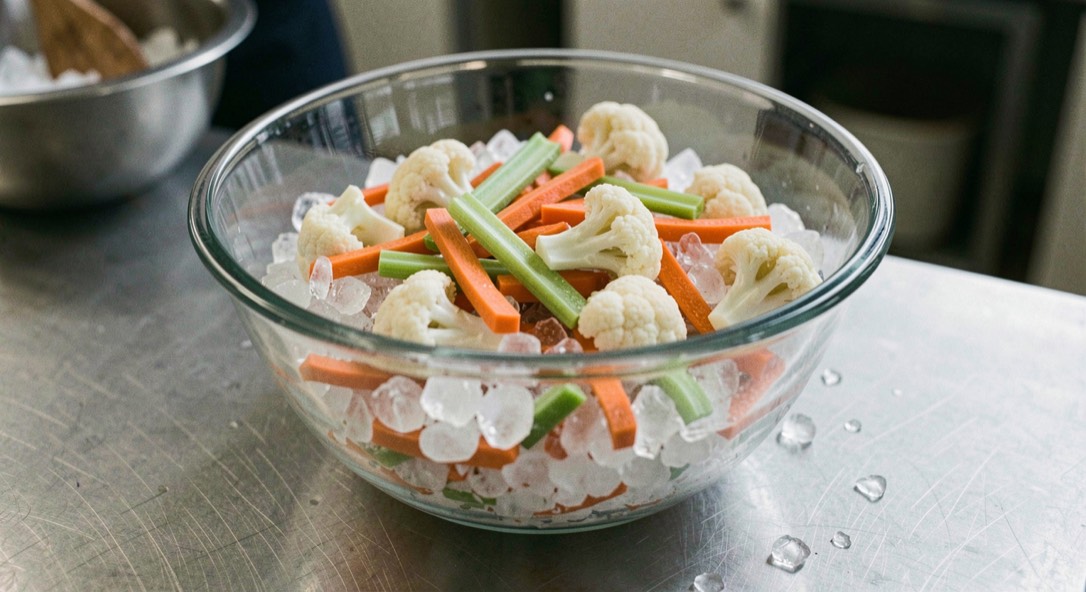
01.13
Mixed vegetables, the only recipe here with no added water
The recipe that shows most plainly what the vinegar is doing, because there is nothing in the jar to dilute it.
-
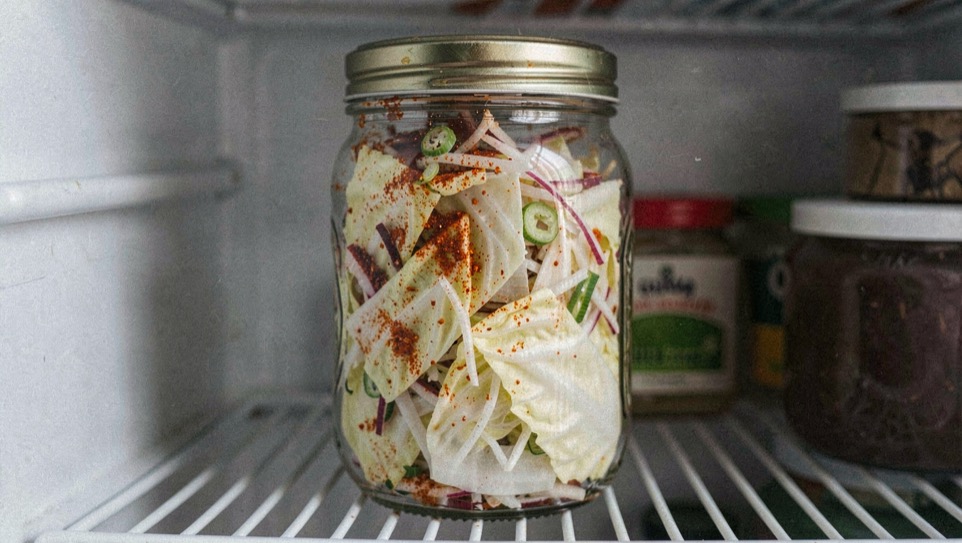
01.14
Kimchi, the one ferment here that is never made shelf stable
One source in this whole set publishes a kimchi procedure, and it differs from every other page here in the way that matters most: the jar never becomes shelf stable.
-
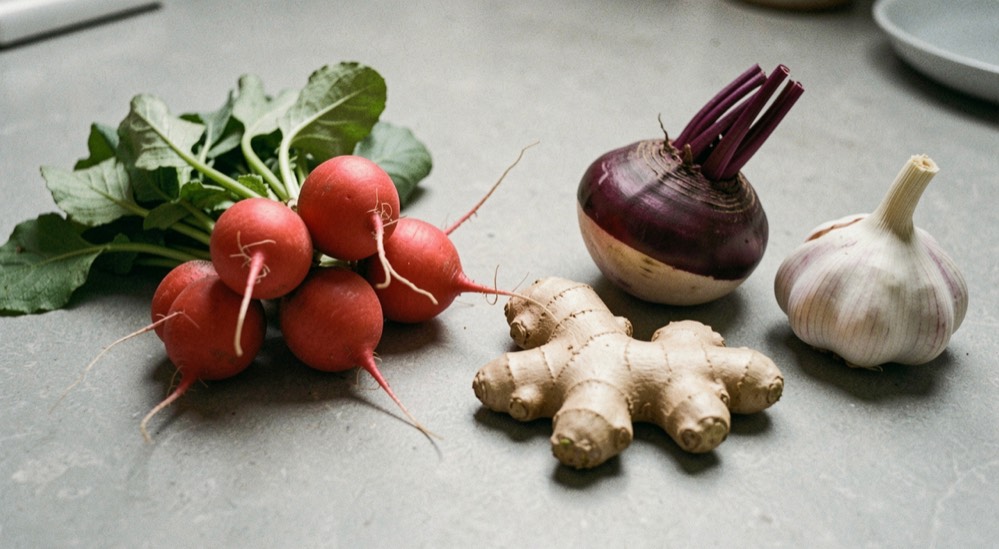
01.15
Four vegetables this manual gives no recipe for, and why
The page that exists because the honest answer to a question is sometimes that nobody tested it, and a manual on this subject may not guess.